Passive plume control with field-proven PRB strategies.
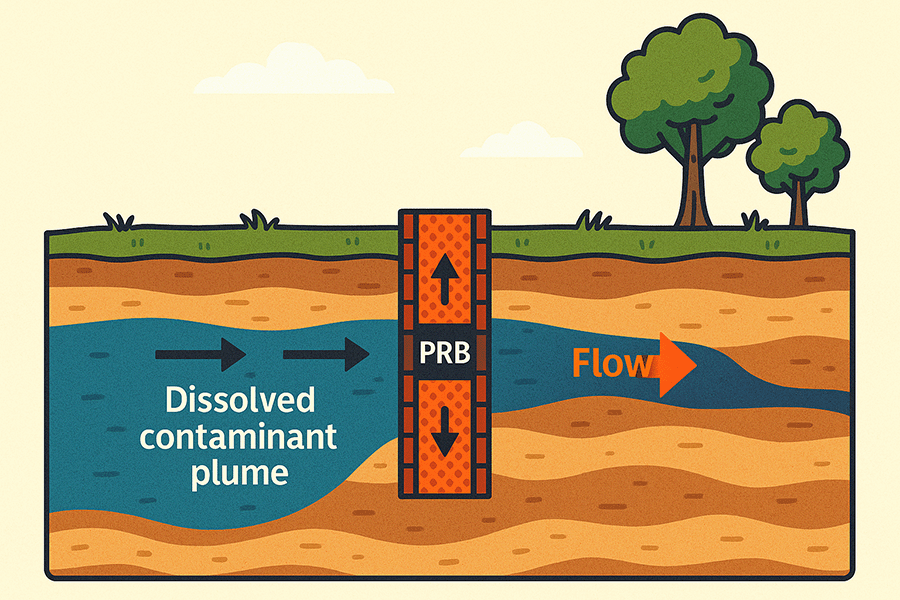
Permeable Reactive Barriers (PRBs) offer a low-disruption solution for containing and treating groundwater plumes—particularly in high-risk or sensitive zones. AST Environmental has successfully designed and installed PRBs across diverse site conditions using both direct-push injection and conventional trenching methods.
Talk to a Remediation Expert
Designing Barriers That Actually Work
A PRB’s effectiveness depends on one thing above all: whether it intersects and treats the majority of the contaminant mass flux. That requires more than just drawing a line on a map and injecting one row of points in the field.
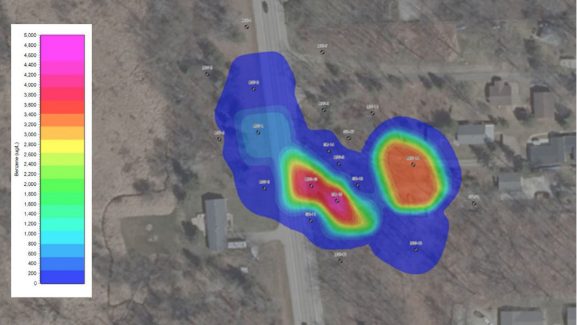
At AST, we approach PRB design with a deep focus on mass flux characterization. Instead of relying on average concentrations or generic assumptions, we use our quantitative high-resolution conceptual site model (CSM) to understand:
Variability in subsurface flow
Distribution of contaminant mass
Preferential pathways that could bypass the barrier
Product reaction and residency time
This data-driven strategy helps us avoid underperformance and ensures that the PRB actually does its job—whether the goal is full plume bisection, partial containment, strategic source isolation, or order of magnitude (OOM) reduction in mass transport.
Deployment Methods That Fit the Site
We’ve implemented PRBs through multiple emplacement techniques, depending on site constraints:
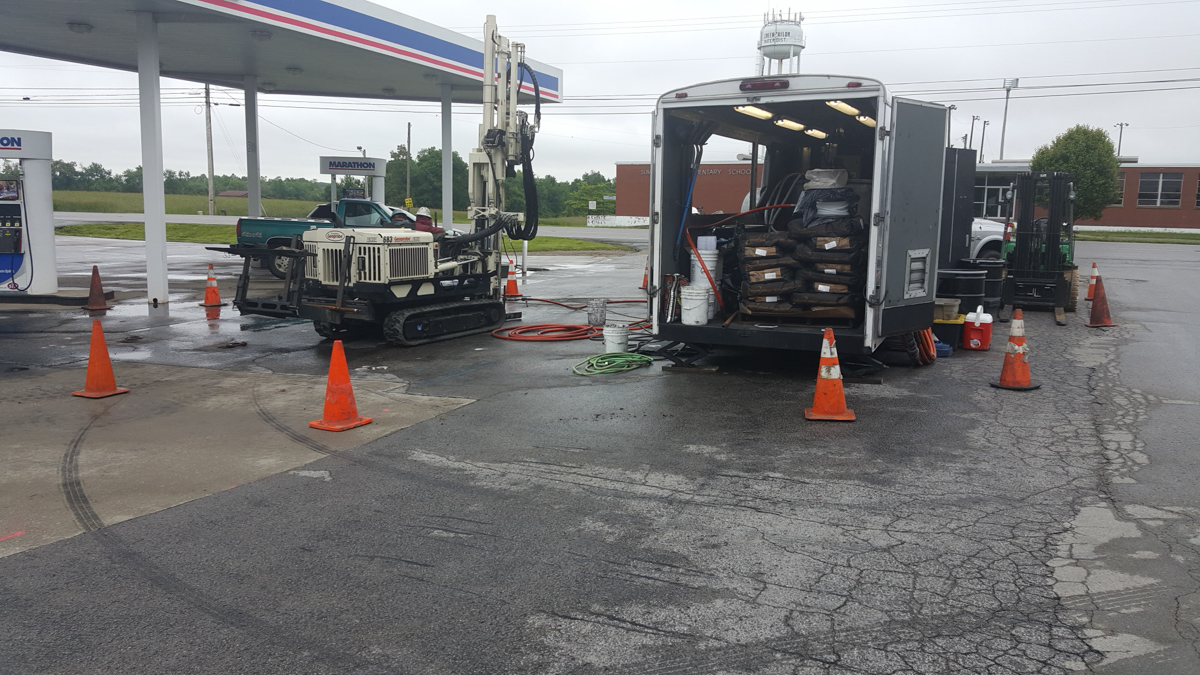
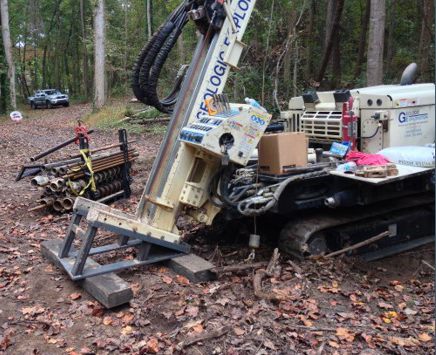
Direct-push injection for targeted subsurface barriers without major surface disruption
GeoTAP for DPT-inaccessible geology and repeated injection needs (e.g., mass flux, schedule, access)
Continuous trenching for large-scale or shallow plume bisection
Induced-gradient zones to drive plume interaction with reactive materials
Trap & Treat® technologies to promote long-term degradation of hydrocarbons and chlorinated solvents
Many clients deploy PRBs as part of a cost-effective hybrid strategy—using passive PRBs to protect sensitive receptors, establish boundary line containment, or cut off plume migration while addressing source areas separately.
When to Consider a PRB
You need quick protection for nearby sensitive receptors or property lines
Site-wide remediation is cost-prohibitive or unnecessary
There’s a need to buy time before full-scale remediation is funded or approved
You want to reduce long-term O&M costs associated with pump-and-treat or active systems
Let’s Deploy It Right the First Time
A PRB isn’t a “set it and forget it” solution unless it is designed based on real-world groundwater flow, geochemistry, and mass flux data. AST brings the tools and experience to ensure your PRB delivers measurable, long-lasting performance.
Permeable Reactive Barriers (PRBs) Insights: Related Webinars
Case Studies from Sites Like Yours
Explore how AST Environmental has delivered results across a range of contaminants, site types, and geologies.
SUMMARY An unknown quantity of gasoline was historically released at an active service station. The released gasoline subsequently impacted soil and groundwater at the service area. The wetland area, downgradient…
SUMMARY BOS 100® was injected adjacent to and beneath a stream using a direct push angle drilling technique to successfully create a PRB and limit PCE flux from the upgradient…
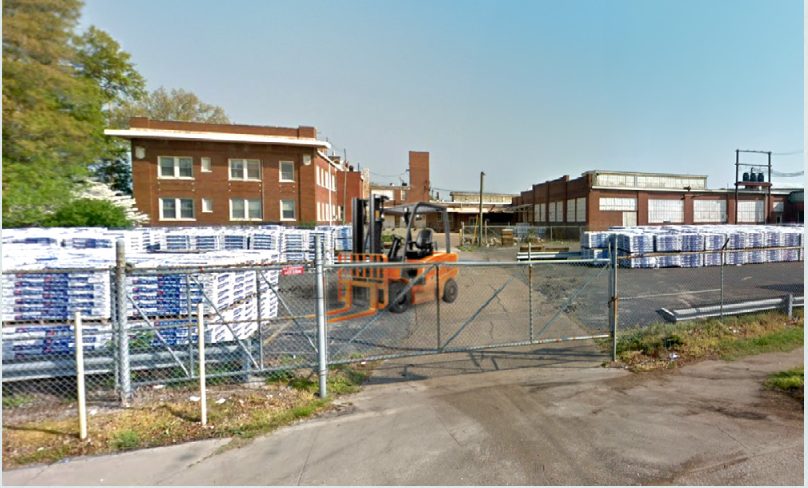
CHALLENGES AND OBJECTIVE The subject site is a manufacturing facility established in 1912 with historic industry that included steel stamping, forming, machining, parts cleaning, and degreasing, heat treating, electroplating (brass,…
SUMMARY In 2015, a gasoline transport tanker struck a parked trailer on the shoulder of a rural highway, causing a release of up to approximately 4,000 gallons of fuel near…
How It Works BOS 100® is a Trap & Treat® in situ remediation technology specifically designed to degrade chlorinated solvents. It is a unique material manufactured from high grade virgin…
How It Works BOS 200® is a high-performance, carbon-based amendment specifically designed to treat petroleum hydrocarbons in groundwater and soil. It utilizes a proprietary blend of activated carbon and support…
How It Works BOS 200+ is a patented in-situ remediation amendment that expands on the proven BOS 200 platform. It enhances performance at challenging petroleum-contaminated sites through advanced sorption, microbial…
How It Works CAT 100® combines the proven BOS 100® platform with engineered biotechnology to create a next-generation in-situ remedy capable of degrading significantly more contaminant mass per unit dose.…
How It Works FLUOROSORB is a proprietary, NSF-certified sorbent engineered by CETCO for high-capacity, long-life PFAS adsorption. It works by selectively binding a wide range of PFAS compounds—both long- and…
How It Works FerroBlack is a custom-manufactured, reactive, abiotic form of ferrous sulfide (FeS) mineral with a “mackinawite” iron structure. It is formulated in a controlled reactor system which produces…
AST has delivered successful in-situ remediation at hundreds of sites across the U.S., including:
• EPA Superfund and Brownfield sites • State Voluntary Remediation Programs (VRPs) • Military installations • Private industrial and commercial sites
Our products and strategies are:
✅ Backed by years of field data and peer-reviewed research ✅ Used by top-tier environmental consultants and engineers ✅ Recognized and approved by regulatory agencies nationwide ✅ Supported by performance monitoring and defensible data
"We don’t just sell products — we partner with your team to help design, execute, and document a successful remediation plan."
Ready to Clean Up Your Site?
We’ve helped stakeholders across the world achieve cleanup goals faster, safer, and more cost-effectively — and we can do the same for you.
Let’s talk through your site and see if in-situ remediation is a fit.