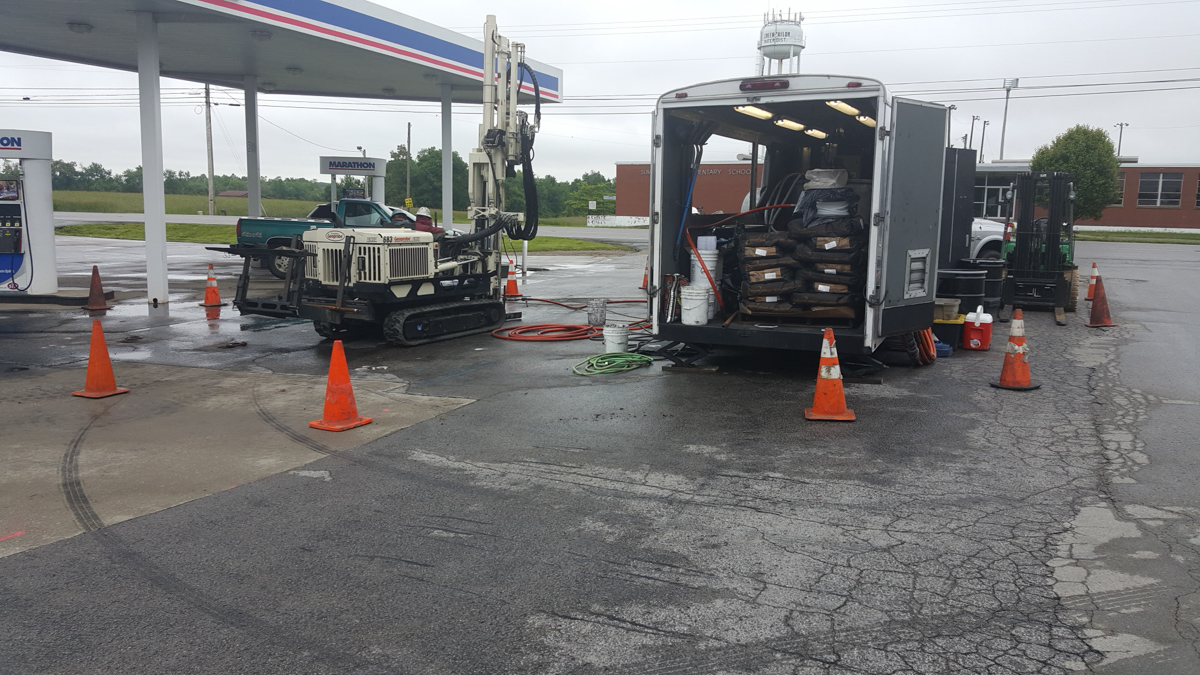
When Standard DPT Isn’t Enough
In most overburden sites, DPT is sufficient to reach treatment zones. But in some geologic conditions—like hardpan, chert, compacted fill, rubble, or partially weathered rock—standard methods fall short.
That’s where GeoTAP comes in.
How GeoTAP Works
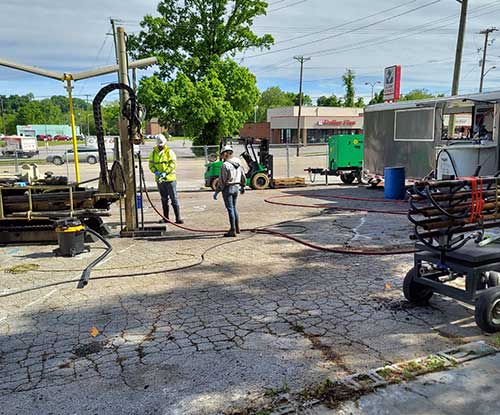
AST developed the GeoTAP approach to enable precise injection in tough lithologies.
Here’s how it works:
- Pre-drill boreholes using traditional roto-sonic, air rotary, or hollow-stem auger drilling methods
- Backfill boreholes with engineered bentonite mixtures (chips, pellets, grout) to seal the borehole wall and create a contiguous column
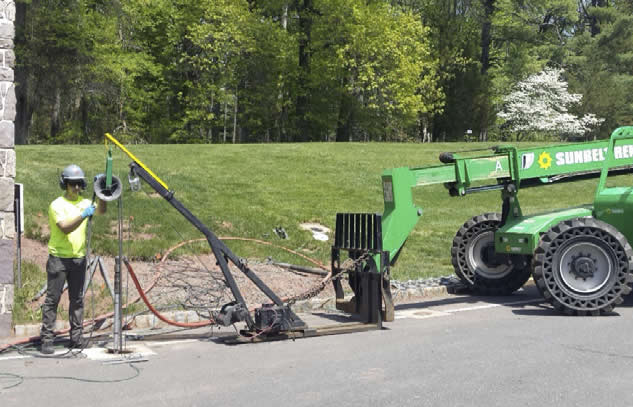
- Use DPT to push through the bentonite column to reach targeted injection intervals
- Inject remedial chemistry (e.g., BOS 100®, CAT 100®, etc.) without compromising borehole integrity or GeoTAP seal
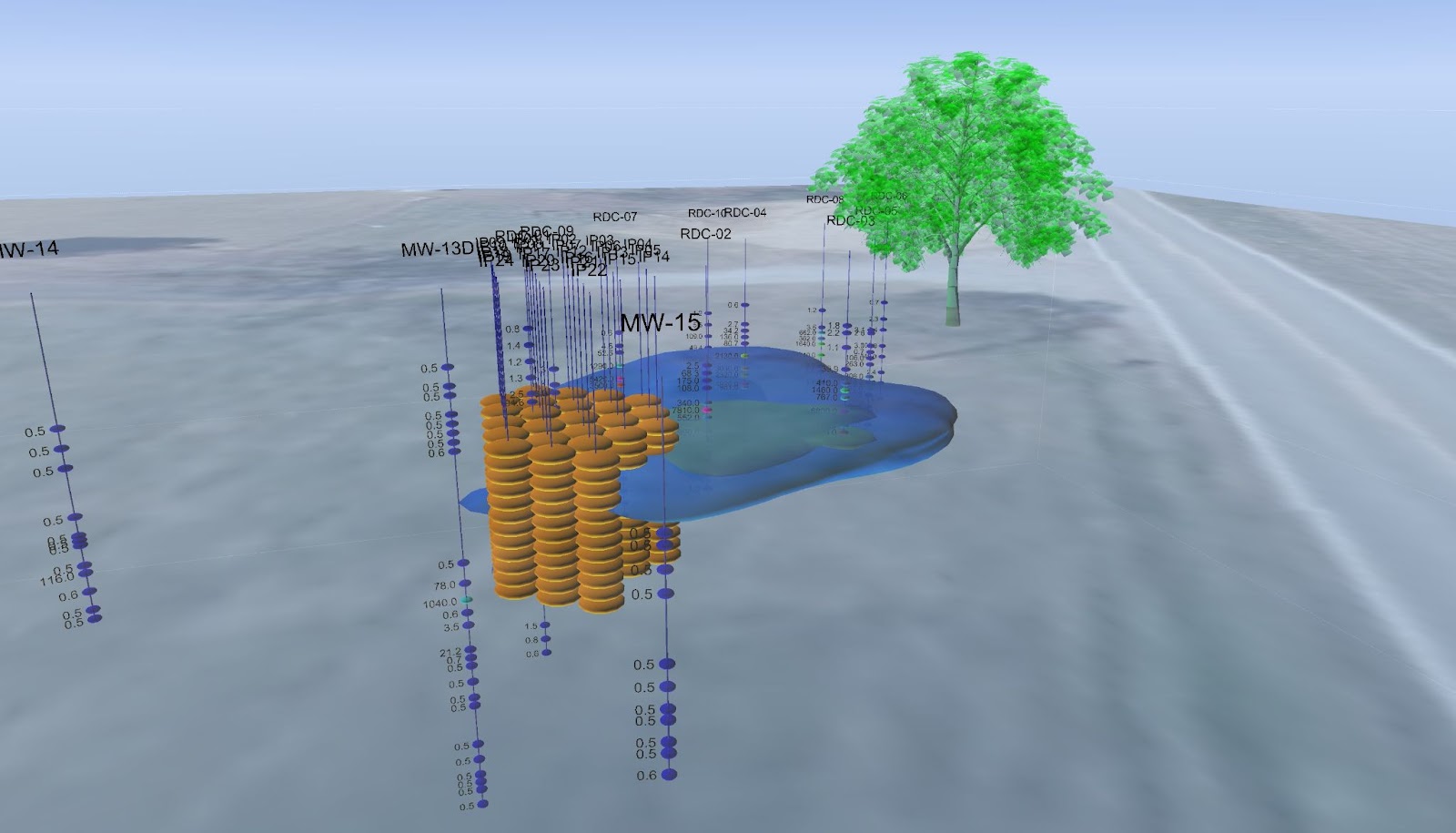
This technique has been successfully deployed on over 60 projects across the U.S., including sites where injection depths exceed 180 feet below ground surface.
Why GeoTAP Works
- Enables access where traditional DPT is blocked
- Maintains seal integrity for accurate reagent placement
- Supports deep injection in both natural and anthropogenic obstructions
- Integrates with AST’s in-situ systems for seamless field implementation
- Compatible with all injectates AST works with
- Reduces risk and delays in high-stakes remediation projects
If your site has impenetrable zones that need injection, GeoTAP opens the path—literally—to greater outcomes and project success.